








Thais have a long relationship with gold — buying it for emergencies and investing through gold-linked funds without ever holding a bar. For decades, gold has been the trusted “safe-haven asset.” In recent years, Bitcoin has earned the nickname “digital gold” for sharing some of gold’s traits. But when you dig into the actual data, the picture looks very different from the label — and it raises a question every investor should answer before deciding.
Where Bitcoin Resembles Gold
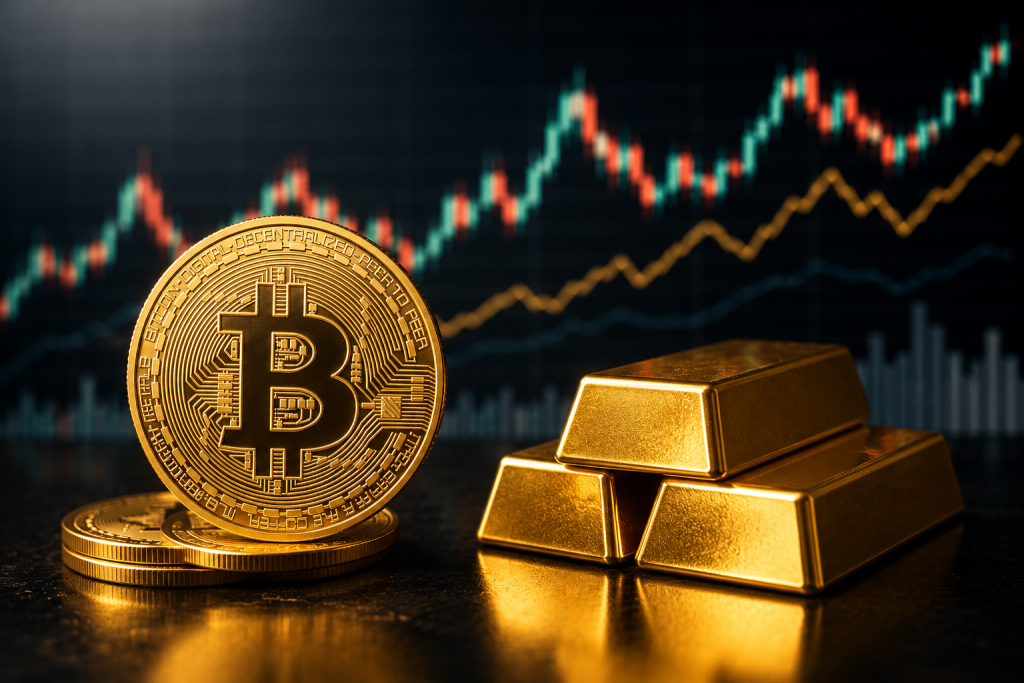
The “digital gold” idea didn’t appear by accident. There’s real logic behind it. First, Bitcoin’s supply is permanently capped at 21 million coins, echoing gold’s natural scarcity. Second, no government or central bank controls it, which leads some to view it as a hedge against monetary policy and inflation — the role gold has long played.
But five years of data tell a different story. Analyzing price relationships from January 2021 to March 2026 reveals something surprising: the correlation between Bitcoin and gold is just 0.06–0.11 — essentially no relationship at all. When gold rises, Bitcoin doesn’t follow; when gold falls, Bitcoin doesn’t either. By contrast, Bitcoin’s correlation with the US S&P 500 index sits at 0.35–0.41 — considerably higher.
The data makes it clear: Bitcoin moves with the mood of the stock market far more than with the price of gold. Its behavior is closer to a “high-volatility tech stock” than a “safe-haven asset.” That means Bitcoin tends to deliver strong returns when the economy is growing and stocks are climbing — but it falls alongside equities during slowdowns or crises, rather than offering shelter the way gold does.
The clearest evidence came in 2022, when surging interest rates triggered a global stock correction. Bitcoin plunged 64% in a single year, while gold dipped only slightly. Anyone who bought Bitcoin hoping it would cushion their portfolio in a downturn got the opposite of what they expected.
What Is a Bitcoin ETF, and Why Does It Change the Game?
An ETF (Exchange-Traded Fund) pools money from many investors to invest in a single type of asset — stocks, gold, or bonds — then divides it into “units” that trade as easily as a single stock. The appeal is that you can buy and sell through an ordinary brokerage account, the price tracks the underlying asset, and you never have to hold that asset yourself. The most familiar example for Thais is the gold ETF, which delivers returns tracking gold’s price without you stashing bars in a safe.
This isn’t new. Back in 2004, the launch of the SPDR Gold Trust (GLD) in the US permanently changed how the world invested in gold. Before then, you bought physical bars or coins; afterward, you could buy gold through a regular stock account.
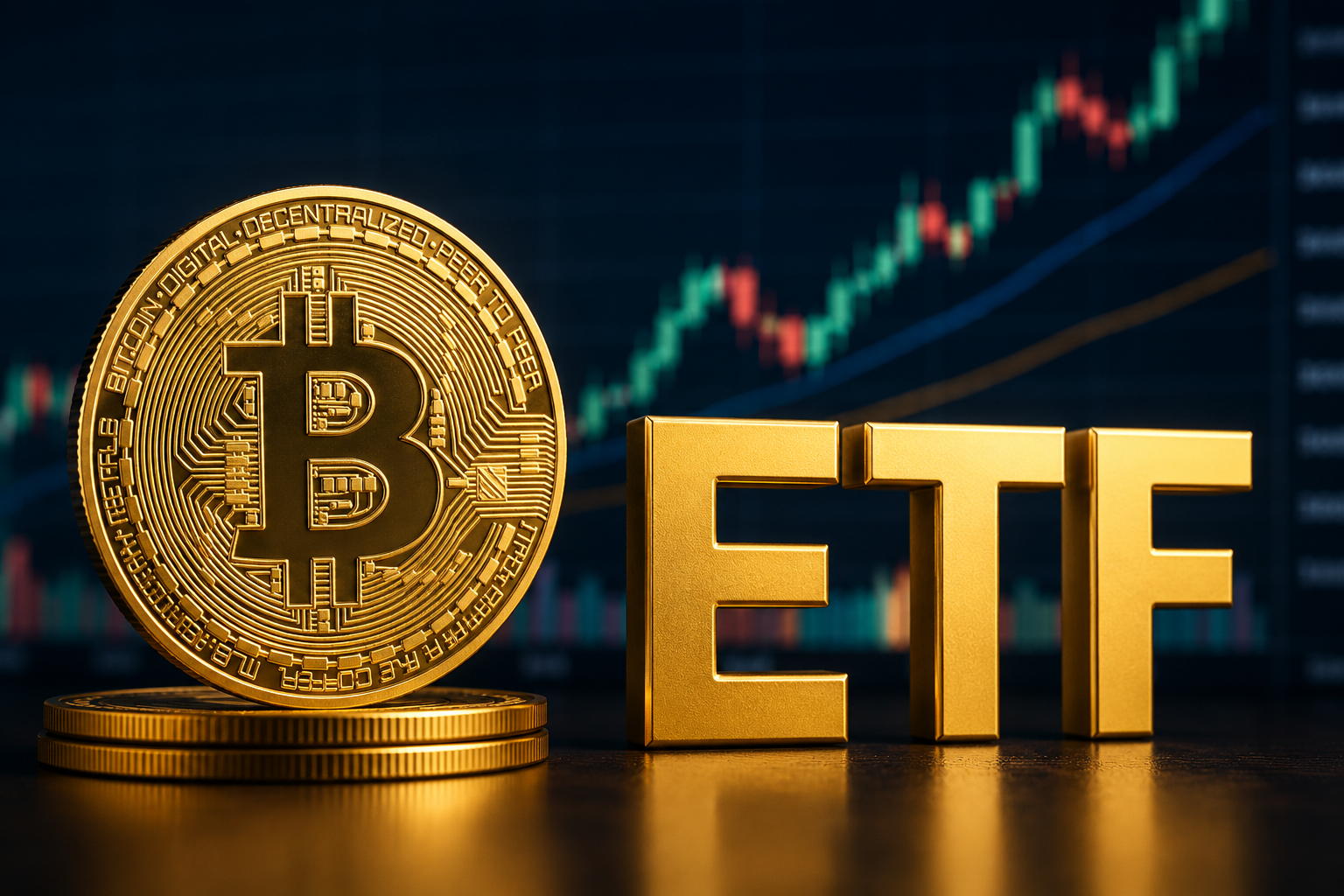
Today, Bitcoin is reaching the same inflection point. A Bitcoin ETF works exactly like a gold ETF: the fund buys and holds real Bitcoin, then sells units to investors. Holders get returns tracking Bitcoin’s price without opening a crypto-platform account, managing a private key, or risking the dreaded “lost password” that wipes out their holdings.
The turning point came on January 10, 2024, when the US SEC approved the first-ever spot Bitcoin ETF. First-day trading volume topped $4.6 billion, and within 50 days, BlackRock’s iShares Bitcoin Trust amassed $10 billion in assets — a milestone GLD took 817 days to reach, making it roughly 16 times faster.
After Approval: What Genuinely Changed
Bitcoin may not be digital gold, but since the SEC’s approval, one thing has clearly shifted: how accessible it is, and who the market’s major holders now are. BlackRock, the world’s largest asset manager, currently holds Bitcoin through its iShares Bitcoin Trust worth over 1.54 trillion baht (roughly USD 46 billion), followed by Fidelity, Goldman Sachs, and the UAE’s sovereign wealth fund. More than 1,800 financial institutions worldwide now officially disclose Bitcoin ETF holdings in their portfolios.
What’s especially worth watching is the steadily rising share held by sovereign wealth funds — a sign of long-term conviction rather than short-term speculation. This matters more than it appears, because these institutions have rigorous decision-making processes, investment committees, and clear risk frameworks. Their choice to hold Bitcoin has been analyzed, not made on a whim.
That said, institutional adoption shouldn’t be read as Bitcoin automatically becoming a safe-haven asset, or one suitable for every investor. Some institutions may hold it for long-term allocation, while others use it for trading or arbitrage strategies.
So, Should It Be in Your Portfolio?
The question most investors really want answered: should you invest or not? Backtests of a mixed portfolio — stocks, bonds, gold, and commodities — over 2024–2026 found that adding Bitcoin at a 5% weighting gave the best result: returns rose meaningfully while total portfolio risk increased only slightly. But push past 10%, and risk climbs faster than the added return.
The key thing to understand is that Bitcoin performs well during economic growth and bull markets, but poorly during slowdowns or crises. It should be seen as a high-risk asset that may play a supporting role in a portfolio rather than a core holding. A small allocation may suit those with a long time horizon who can stomach short-term volatility — a reasonable starting point being 1–5% of a portfolio: enough to benefit from diversification, but not so much that it becomes an unbearable burden when markets swing.
The Bottom Line
Bitcoin may not be the digital gold many imagine, but it has its own distinct nature — and it’s carving out a clearer place in long-term portfolios. The arrival of ETFs has made it far more accessible, just as gold funds once opened gold investing to ordinary people without owning bars. History shows GLD took years to go mainstream; the Bitcoin ETF is walking the same path, only much faster. The data doesn’t say everyone needs Bitcoin — but for those who understand its true nature, holding a small allocation may be a more reasonable decision than it first appears.
source: https://thestandard.co/