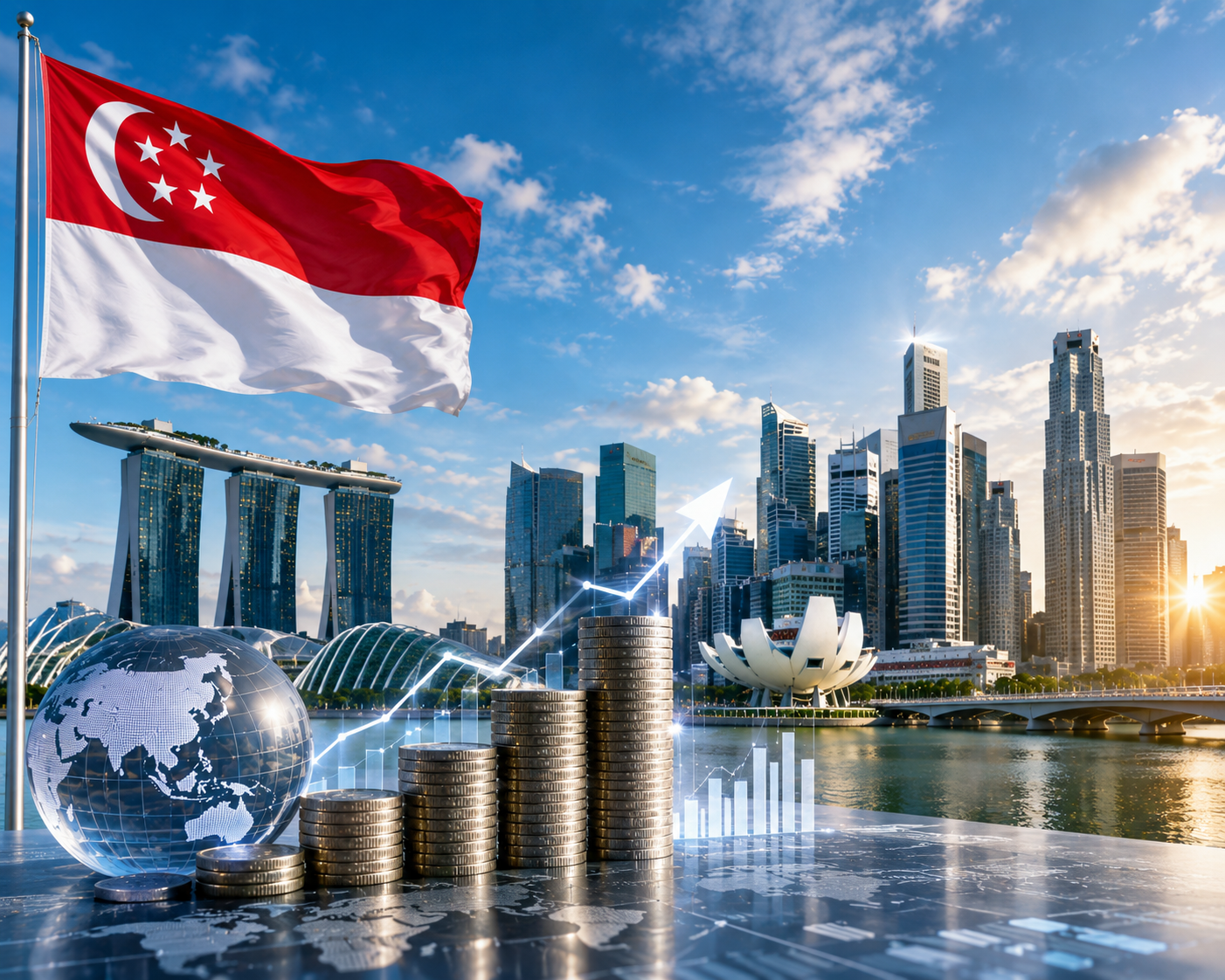










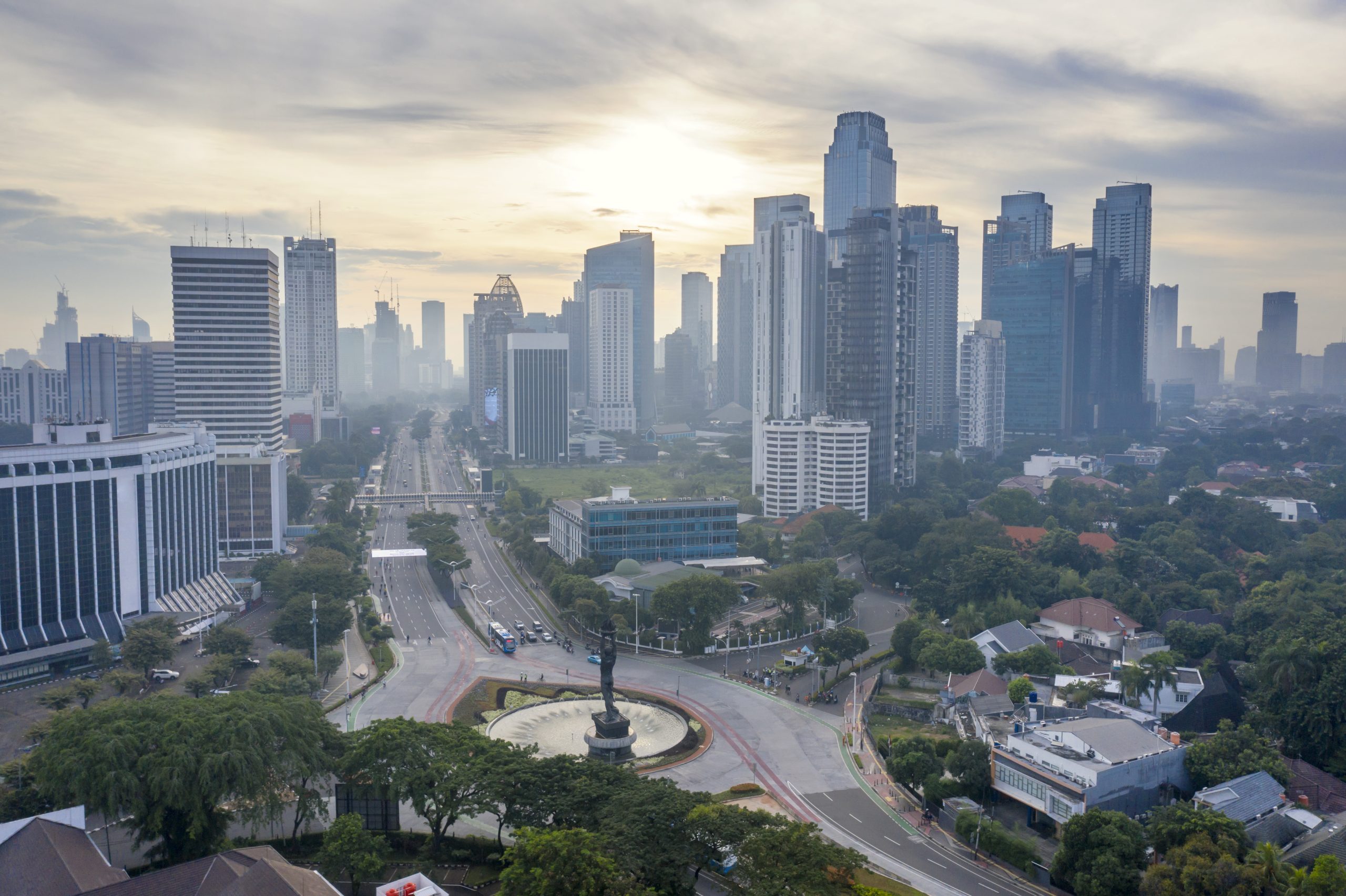
Indonesia is Southeast Asia’s largest economy — and in 2026, it’s one of the most compelling places in the world to invest. With a huge young consumer market, steady growth, and a government actively courting foreign capital, it has become a top choice for entrepreneurs looking to enter Asia. For Thai businesses in particular, it’s a natural next step. Here’s why.
Steady Growth and a Massive Market
Indonesia’s appeal starts with its fundamentals, which are unusually solid. The economy has consistently grown around 5% a year — Q1 2026 GDP rose 5.61% year-on-year — giving corporate planners the stable, predictable base they need. Behind that growth is a genuine demographic jackpot: home to roughly 288 million people, Indonesia offers one of the world’s largest domestic markets, with GDP per capita now above USD 5,300 and climbing. A young population and a fast-rising middle class continue to drive demand across consumer goods, fintech, healthcare, education, logistics, and digital services.
The scale of capital flowing in reflects this. Indonesia recorded around USD 29 billion in total investment realization in Q1 2026 alone, and foreign direct investment grew 8.5% year-on-year over the same period, outpacing domestic investment. For many international companies, Indonesia is no longer just a place to manufacture — it’s a large consumer market in its own right.
Government Spending That Creates Opportunity
The government is a major driver of new opportunity. Indonesia continues to pour money into infrastructure — toll roads, ports, and mass transit — improving connectivity and opening the door for local supply chains. This state spending creates real openings for businesses in construction, engineering, technology, finance, and services. The country is also pushing hard on “downstreaming” (hilirisasi): rather than exporting raw minerals, Indonesia now requires foreign companies to build processing and value-added facilities locally, which has created a boom in advanced manufacturing across regions like Central Sulawesi and Maluku.
A Gateway to ASEAN and Beyond

As an ASEAN member, Indonesia trades with the nine other member states — including Thailand — at minimal or zero tariffs. Businesses that set up in Indonesia can export easily across a Southeast Asian market of over 650 million people, and ASEAN’s network of agreements extends preferential access further to China, India, Japan, South Korea, Australia, and New Zealand. Position a business well in Indonesia, and you’re positioned across the region.
Special Economic Zones and Fiscal Incentives
To attract serious players, Indonesia offers some of the most comprehensive incentives in the region. As of 2026, the country operates around 25 active Special Economic Zones spanning manufacturing, digital, tourism, and healthcare. In the Batam, Bintan, and Karimun Free Trade Zones, investors are exempted from import duty, income tax, VAT, and sales tax on capital goods, equipment, and raw materials — and 100% foreign ownership is permitted. The government also offers tax holidays, tailored tax allowances for priority sectors, and super deductions for labor-intensive industries.
One standout story is data centers. The Nongsa SEZ in Batam — just 45 minutes by ferry from Singapore, with high-speed fiber and strong tax incentives — has become a magnet for hyperscale investors who previously looked only at Malaysia and Thailand.
Easier, More Predictable Rules
Doing business in Indonesia has become steadily more straightforward. Recent reforms — including PP No. 28/2025, which introduced a “Positive Fictitious” (Fiktif Positif) mechanism to slash upfront processing delays, and the updated KBLI 2025 business classification codes — are designed to make licensing more predictable. Rather than adding red tape, these changes weed out rogue operators and give legitimate, compliant investors greater certainty.
English Works in Business
While Indonesia has hundreds of local languages, the business world widely accepts English. In major cities like Jakarta, you can operate and do deals without learning the local language or hiring interpreters — though understanding Indonesian business culture, which differs from the West, is still worth the effort.
The Challenges (and Why They’re an Opportunity)
Indonesia isn’t friction-free, and it’s fair to acknowledge that. Newcomers face bureaucracy, evolving compliance requirements, and cultural differences, which is why many businesses default to the familiar path of China or Japan. But that hesitation is exactly the opportunity: fewer Western competitors means less competition and more room to succeed. The keys are patience, the right legal structure, and local expertise to guide your market entry.
How Foreigners Set Up
Most foreign investors operate through a PT PMA (a foreign-owned limited liability company). The exact licensing pathway depends on your chosen KBLI business classification and activities, handled through Indonesia’s OSS online system — which is where experienced local support makes the difference between a smooth launch and months of delay.
The Bottom Line
For 2026, Indonesia offers a rare combination: one of Asia’s largest and youngest consumer markets, steady 5% growth, generous SEZ incentives, 100% foreign ownership in key zones, and a gateway into the whole ASEAN region. The compliance landscape is more structured than before — but that structure brings certainty for investors who set up correctly from the start.
Entering Indonesia is far smoother with a partner who knows the ground — and that’s exactly what the Unionspace x InvestinAsia group provides. From PT PMA company incorporation, business licensing, and KBLI alignment to visas, tax, legal compliance, and serviced office space, we handle the setup so you can focus on growth. Backed by trusted local networks — including the Thai Chamber of Commerce Indonesia (Thaichamindo) — we help Thai and international businesses expand into Indonesia with confidence and certainty. Talk to us about growing your business in Indonesia →