







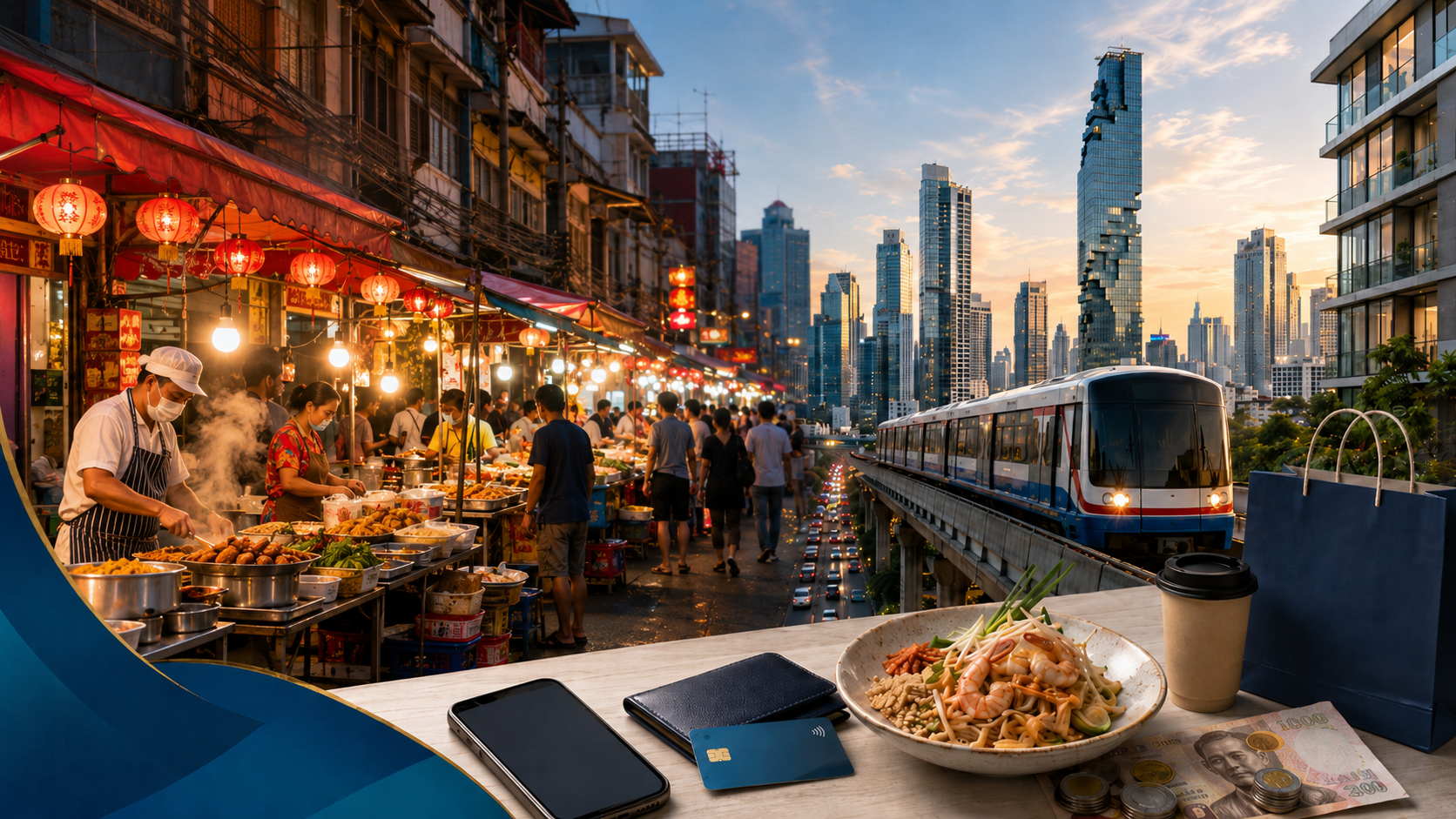
Bangkok keeps getting more expensive, but it remains one of the best value-for-money cities in Southeast Asia for the lifestyle you get in return. Whether you’re relocating for work, launching a business, retiring, or testing out the digital nomad life, here’s a realistic look at what living in Thailand’s capital actually costs in 2026 — based on current market rates, not the outdated figures still floating around
A quick note on currency: the baht is trading at roughly 33–35 THB per USD in 2026, so we’ve listed both throughout.
The Short Answer
A single professional living comfortably in Bangkok spends about 40,000–55,000 THB per month (roughly $1,150–1,570), covering rent, food, transport, and leisure. You can get by on around 35,000 THB if you’re careful, or spend far more if you want a luxury condo and a Western lifestyle. The single biggest variable is always rent.
Here’s how the major categories break down.
Rent — Your Biggest Expense
Where and how you live changes everything. A decent studio near BTS Ari or MRT Phra Ram 9 now runs about 12,000–18,000 THB per month, while a studio in a central district sits around 15,000–25,000 THB ($430–715). A one-bedroom in a newer building can run 18,000–28,000 THB depending on the floor and view.
A useful insider tip: buildings from the early 2000s often have larger floor plans and lower rent than brand-new towers, and many still come with a pool and gym. For families, a three-bedroom condo or townhouse in areas like Bangna or Bearing runs about 40,000–60,000 THB per month.
Food — From Street Stalls to Fine Dining
This is where Bangkok shines. Lunch at a local Thai restaurant costs just 50–80 THB ($1.50–2.30), while a Western-style restaurant meal runs 350–600 THB ($10–17). A realistic monthly food budget for a single person who mixes street food with the occasional restaurant lands around 10,000–15,000 THB. One caveat: imported groceries — cheeses, cured meats, good bread — cost three to five times what you’d pay back home, so a Western kitchen adds up fast.
Utilities — Watch the Air Conditioning
This is the line item that surprises newcomers most. With Bangkok averaging around 30°C year-round, running AC for eight or more hours a day produces an electricity bill of 2,500–4,000 THB per month — which can actually exceed the rent in a budget condo. Add internet and water, and total utilities run roughly 3,000–5,000 THB. Tip: check whether your building uses an individual or shared electricity meter, as shared meters inflate the cost.
Transport — Cheap and Efficient on the Lines
A monthly BTS/MRT pass costs around $30–60, with occasional Grab rides at $2–8 each. Living within walking distance of a station saves you both money and Bangkok’s notorious traffic. Budget around 2,500–4,000 THB per month if you stick mostly to the trains.
Healthcare — World-Class and Affordable
Walk-in clinic visits run $15–40, private hospital consultations $40–100, and comprehensive expat health insurance falls between $60 and $300 per month depending on coverage and age. Health insurance is the biggest wildcard in any Bangkok budget, but Thailand’s private hospitals rank among Asia’s best — a major reason expats and retirees choose the city.
Where to Live: A Quick Neighborhood Guide
Sukhumvit (Thong Lo, Phrom Phong, Ekkamai) is the core expat corridor, packed with international restaurants, schools, and clinics. Ari and Ratchathewi draw younger professionals with lower rents and a more local feel, while Sathorn and Silom serve the business community with premium high-rise living.
Bangkok in 2026 can be as cheap or as expensive as you make it. The cost of living (excluding rent) sits roughly 35–40% below Western European capitals, which means the same income stretches dramatically further — freeing up money for travel, savings, or simply a slower, sunnier pace of life.
If you’re moving to Bangkok to work for yourself, run a business, or work remotely, there’s one cost worth planning for that personal budget guides usually skip: your workspace. A private office lease in central Bangkok means a long-term commitment, deposits, and fixed monthly rent whether you use the space or not. A flexible coworking membership is a fraction of that — and it comes with fast internet, meeting rooms, a professional business address, and a built-in community of founders and freelancers.
That’s exactly what Unionspace offers across Thailand: hot desks, dedicated desks, and private serviced offices on flexible terms, plus virtual office and business-address solutions if you’re registering a company. Keep your monthly overhead light while you settle into the city and we offer many other services, including those related to taxes, visas, and residence.. Explore Unionspace locations in Thailand →