








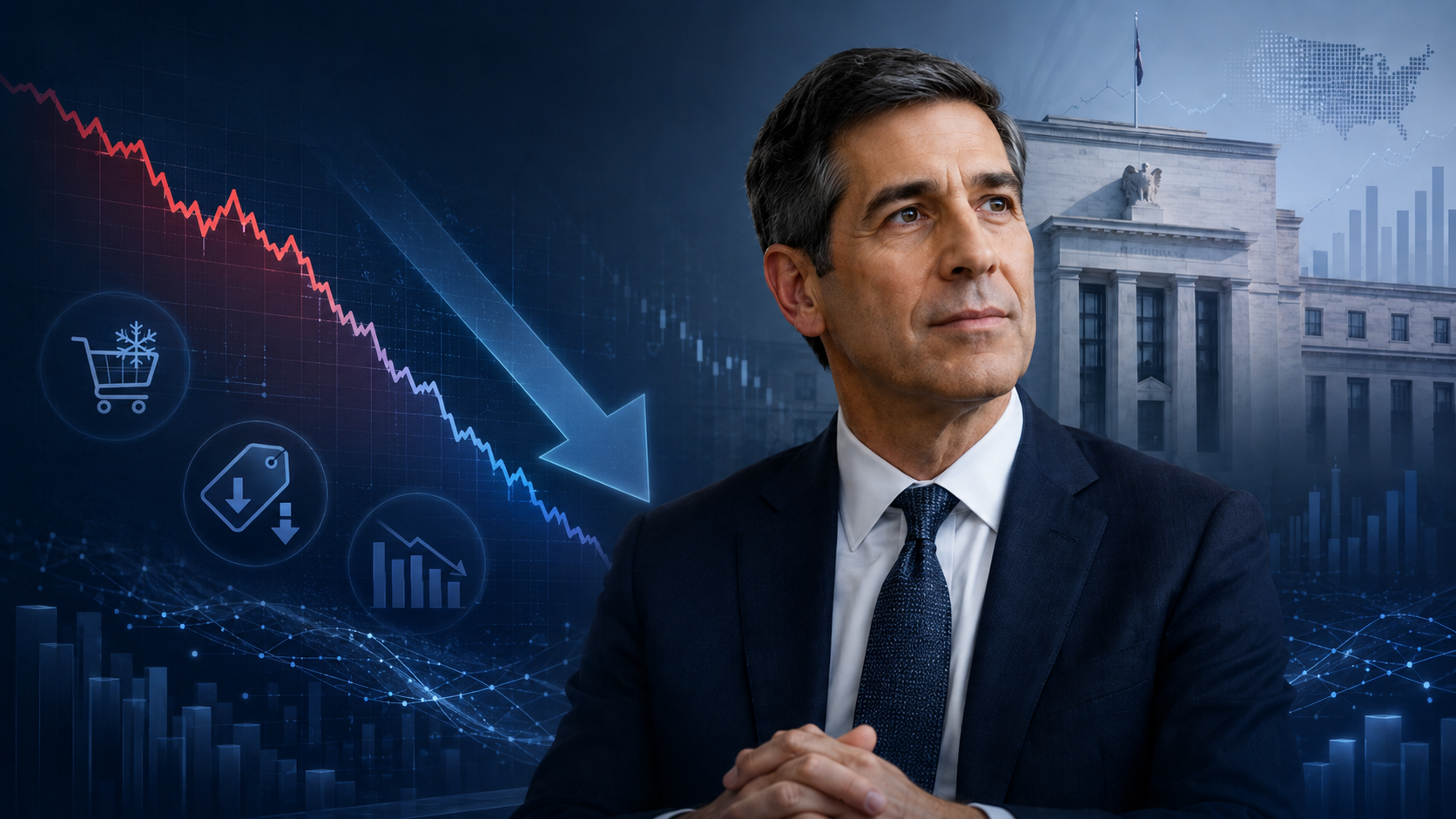
US Federal Reserve Chair Kevin Warsh said price risks have declined over the past few weeks, while reaffirming his commitment to pulling inflation back down to the Fed’s 2% target, Bloomberg reported.
Speaking on Wednesday (July 1) at the European Central Bank’s annual central banking forum in Sintra, Portugal, Warsh said that inflation expectations had come down over the first four weeks of his tenure, and that inflation risks had eased along with them. He echoed the message from his first press conference as Fed chair last month: the central bank will keep working to restore price stability.
Bond yields fell on Warsh’s remarks. The yield on the 2-year US Treasury note dropped to a session low of around 4.15% (10:25 a.m. New York time) after his comments.
Notably, Warsh didn’t point to any specific price gauge he’s watching. For context, the latest reading of the PCE price index — the Fed’s preferred inflation measure — rose 4.1% year-on-year, with core PCE (excluding food and energy) up 3.4%. That said, energy and gasoline prices have plunged in recent weeks as the US and Iran entered peace talks.
“We’re going to get the US to price stability. That’s the mission this committee has taken on, and our goal is to achieve it,” he said. “As for tactics, strategy, and other details — those remain to be seen.”
On Fed independence. Warsh stressed the Fed’s independence in setting appropriate policy, amid persistent calls from President Donald Trump for aggressive rate cuts. “We’ve been an independent central bank for a very long time, and we’ll remain one during this period. You won’t see any change in that stance,” he said during a panel at the ECB forum.
No forward guidance. Warsh again declined to signal the future path of rates. Asked directly whether a rate hike would be on the table at this month’s meeting, he said the moderator was “trying to get me to break this rule” against forward guidance — and “she won’t succeed.” He recalled that at his first press conference last month, Fed policymakers had agreed that forward guidance was “not appropriate for the current policy environment.”
“We’re setting a new path,” Warsh said, adding that he wants a full, open debate when the committee meets in four weeks — a reference to the July 28–29 policy meeting.
Although the Fed held rates steady last month, officials signaled growing support for a hike this year amid inflation rising at its fastest pace since 2023. Updated projections showed 9 of 18 officials expect a rate increase this year, though Warsh declined to offer his own forecast. The FOMC voted unanimously last month to keep the benchmark rate at 3.5%–3.75%, and investors are now pricing in at least a 0.25% hike by year-end.
What’s coming next. On whether the Fed might drop forward guidance more permanently, Warsh pointed to the five task forces he announced in June — one reviewing communications, others covering the balance sheet, the Fed’s use of data, productivity and employment, and the central bank’s inflation framework. He said member names should firm up next week, with participants including outside experts and some individuals from outside the US.
Asked about the Fed’s balance sheet — currently $6.7 trillion, still well above pre-Covid levels — Warsh said it’s “no secret” he has previously favored shrinking the asset portfolio, but any future changes are an FOMC decision that would be “carefully and publicly considered.” He noted it could take more than 18 weeks to trim the balance sheet.
Turning to AI, Warsh said it’s too early to judge whether the current investment surge is fueling broad inflation, but that the technology will ultimately drive a supply-side boom that lifts productivity — with its economic impact becoming clearer in the coming months. “Even if we see business surveys saying ‘it’s no big deal,’ my prediction is that six months from now those surveys will say the opposite,” he said. “We’re at the start of this revolution. This is a major paradigm shift.”
Source: Bangkok Biznews / Bloomberg